
Solo travel is a transformative experience. There is no one else to defer to, no one else to blame for a wrong turn, and no one else to share the moment when you round a corner and see something so beautiful that your breath catches. It is also, let us be honest, a little daunting at first — especially the safety question. How do you stay safe when there is no one watching your back?
The answer is preparation, awareness, and a few practical systems. Solo travel is not inherently more dangerous than group travel — in many ways it is safer, because solo travelers tend to be more alert, more deliberate, and less distracted than those in groups. This guide covers the fundamentals of solo travel safety that apply regardless of destination: from pre-departure planning to on-the-ground awareness to digital security and emergency preparedness.
Research Your Destination Honestly
Safety preparation begins before you board the plane. Research your destination specifically and honestly — not just the highlights, but the safety landscape. The U.S. State Department's travel advisories (travel.state.gov), the UK Foreign, Commonwealth and Development Office (gov.uk/foreign-travel-advice), and Australia's Smartraveller are the most reliable official sources, updated regularly with current conditions including civil unrest, health risks, and crime levels.
Beyond official sources, forums like Lonely Planet's Thorn Tree, Reddit's r/solotravel, and destination-specific Facebook groups give you real, recent experiences from fellow solo travelers. Pay attention to reports from travelers who match your profile — a solo female backpacker in Southeast Asia will face different considerations than a solo male business traveler in Western Europe.
Register with Your Embassy
Many travelers skip this step, but registering with your home country's embassy at your destination is one of the most important safety actions you can take before departure. The U.S. State Department's STEP (Smart Traveler Enrollment Program) at step.state.gov is free and takes ten minutes. Registration means your embassy can contact you in case of emergency — natural disaster, civil unrest, family emergency at home — and helps rescuers locate you if something goes wrong.
Share Your Itinerary
Someone at home should always know where you are. Share your detailed itinerary — including accommodation names and addresses, planned activities, and transport bookings — with at least one trusted person before you leave. Update them when plans change significantly. A simple weekly check-in text (or a shared location with a trusted contact via Google Maps or Apple's Find My) gives your support network the information they need to raise an alarm if they cannot reach you.
Apps like Tourlina and Travel Women are designed specifically for solo female travelers to connect with other women at the same destination, offering both social opportunities and a built-in safety network of fellow travelers.
The Documents System
Losing your passport in a foreign country is one of the most stressful experiences a traveler can have. It is also highly manageable if you are prepared. Before every trip: photograph every important document (passport, visa, insurance card, driving license, credit cards front and back) and store copies in a secure cloud folder accessible from any device. Email copies to yourself. Leave physical copies with someone at home.
- Passport — photograph the data page and any visas
- Travel insurance policy — including the 24-hour emergency assistance phone number
- Credit and debit cards — photograph both sides; note international customer service numbers
- Driving license — useful as secondary ID when you do not want to carry your passport
- Hotel or accommodation addresses — printed on paper, not just on your phone
- Embassy contact for your home country at your destination
Carry your passport in an RFID-blocking travel wallet worn under your clothing when moving through high-risk areas (airports in countries with petty theft issues, crowded transit, busy markets). In low-risk contexts like a cafe or restaurant, a smaller card wallet with just your day's essentials is perfectly fine.
Situational Awareness in Public
The single most effective safety tool you have is the same one that has kept humans safe for millennia: paying attention. Situational awareness means knowing who is around you, what feels normal about your environment, and what feels off. It is not about paranoia — it is about being present rather than buried in your phone while navigating an unfamiliar street.
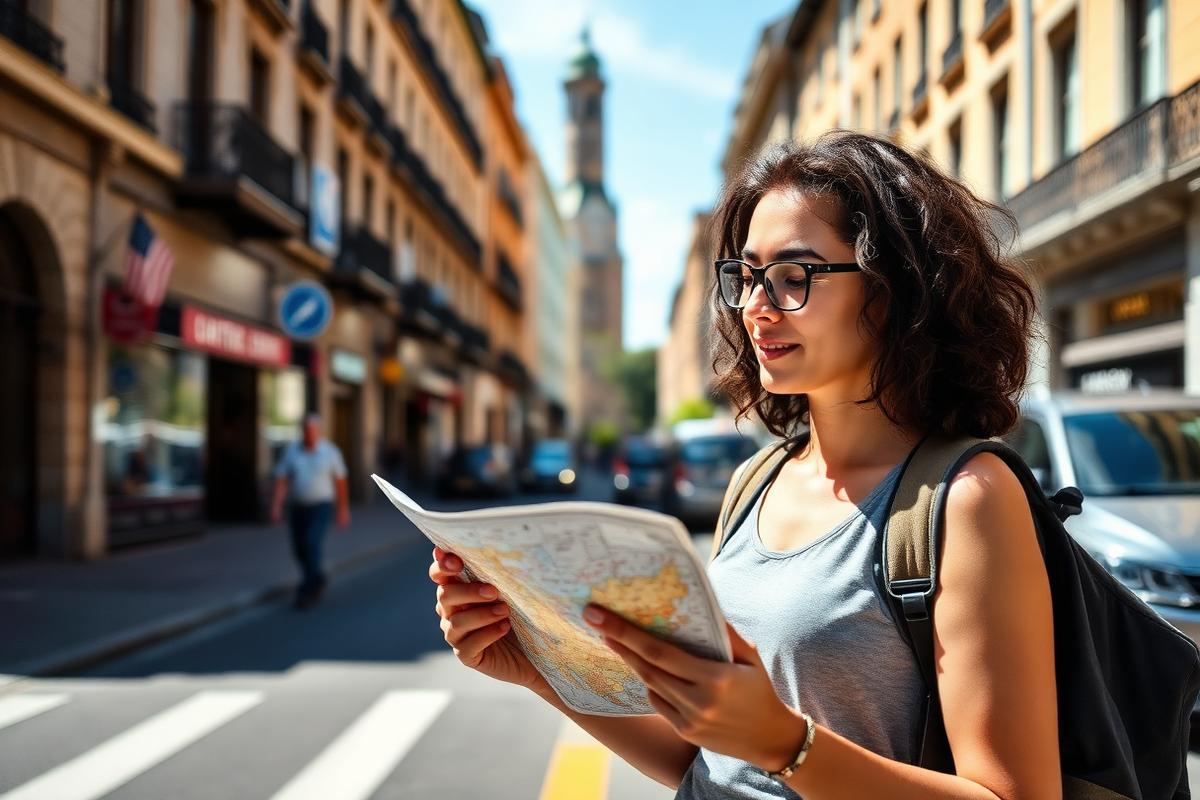
Practical habits: look up your route before you leave so you know roughly where you are going without consulting your phone every thirty seconds (a clear giveaway that you are navigating unfamiliar ground). Walk with purpose rather than obvious uncertainty. Make brief eye contact with people passing — not sustained, just enough to communicate alertness. If an area starts to feel uncomfortable, trust that instinct and leave without overthinking it.
Transport Safety
Transportation is where many travel incidents occur — not because travel is inherently dangerous but because it involves unfamiliar environments, fatigue, distraction, and occasionally unscrupulous operators. Key habits: always use official, licensed taxi companies or app-based rides (Uber, Bolt, Lyft, Grab) rather than unmarked cabs that approach you in airports. Confirm the driver's name and license plate before getting in. Share your ride details with a contact if it is a longer journey.
On overnight trains, buses, or ferries: use a combination lock on your bag and tether it to something fixed if you are sleeping. Keep your valuables (passport, phone, wallet) in a money belt under your clothing or a small bag worn on your front. Light sleepers have a natural advantage here; if you sleep deeply, consider a top bunk (harder to access while you sleep) or a private cabin where available.
Accommodation Safety Checks
When you arrive at your accommodation, take five minutes to do a quick safety check. Locate the fire exits — count the number of doors from your room to the nearest exit so you can navigate in smoke or darkness. Check that your room door locks properly and that the window locks function. Test whether the phone works (for contacting the front desk). If anything feels wrong — a door that does not close properly, a room that has an accessible window from the outside — ask to be moved.
Managing Money and Cards
Never carry your entire travel budget in one place. Distribute your financial resources: one debit card in your day wallet for daily spending, one debit card and one credit card in your secure travel wallet or accommodation safe, and a small emergency cash reserve (in local currency and USD or EUR) hidden separately — sewn into a bag lining, tucked in a shoe, or stored in a locked accommodation safe.
Notify your bank of your travel dates and destinations before you leave to prevent fraud alerts from blocking your card at the worst possible moment. Have your bank's international customer service number saved in your phone and written on paper. A card blocked by your bank at 11 p.m. in an unfamiliar city with no cash is a situation you want to have planned for.
Digital Safety on the Road
Your phone is your primary safety tool — navigation, emergency communication, translation, banking. Protect it accordingly. Use a strong PIN (not a birthday or obvious sequence). Enable Find My iPhone or Find My Device (Android) so you can locate or remotely wipe it if lost. Install a VPN (NordVPN, ExpressVPN, ProtonVPN) and use it when connected to public Wi-Fi in hotels, cafes, and airports. Public networks are hunting grounds for credential theft.
Back up your photos daily to cloud storage. The heartbreak of losing irreplaceable travel photos is real and entirely preventable with a simple automated backup setting.
Travel Insurance: Non-Negotiable
Comprehensive travel insurance is the most important safety purchase you will make for any trip. Medical emergencies abroad can cost tens of thousands of dollars — a medical evacuation from a remote destination can cost over $100,000. Travel insurance costing $50–150 for a two-week trip covers medical expenses, emergency evacuation, trip cancellation and interruption, lost luggage, and sometimes adventure activities like hiking and diving.
Read your policy carefully before you travel. Understand what is covered and, crucially, what is excluded. Pre-existing conditions, adventure activities above a certain elevation, and alcohol-related incidents are common exclusions. World Nomads is the most popular travel insurance provider for independent travelers; SafetyWing offers a subscription-based model popular with digital nomads and long-term travelers.
Solo travel done well is not reckless — it is considered. It is knowing where you are going, having a plan when things go sideways, and carrying the confidence that comes from preparation. The world is genuinely wonderful for solo travelers who travel smart, and the sense of self-reliance and capability you develop on the road stays with you long after you come home.