
Most people who visit Japan for the first time sprint. They tick off Tokyo, Kyoto, Osaka, Hiroshima, maybe Nara, in a breathless ten-day loop. And while that itinerary is undeniably wonderful, it is also, in retrospect, a little like eating a seven-course meal in forty-five minutes. Japan is a country of extraordinary depth — cultural, sensory, philosophical — and the rural interior, the hot-spring villages, the cedar-forested mountain valleys, are where that depth becomes most accessible to the slow traveler.
A week based in one or two ryokan — the traditional Japanese inn — in the mountain countryside is not just a travel experience; it is closer to a reset. The combination of thermal baths, seasonal kaiseki meals, the silence of snow-country mornings, and the gentle choreography of inn life removes the noise from your head in a way that almost nothing else does. This guide is for anyone ready to trade the highlight reel for the real thing.
What Is a Ryokan and Why It Changes Everything
A ryokan is a traditional Japanese inn, typically family-owned, built around a set of rituals that have remained largely unchanged for centuries. You sleep on a futon laid on tatami mats. You wear a yukata robe. You eat a multi-course kaiseki dinner in your room or a private dining area, then a quieter but still beautiful breakfast the following morning. You bathe in the onsen — the hot spring bath — morning and evening, following a simple etiquette of washing before entering and soaking in silence.
What makes a ryokan transformative for the slow traveler is that the inn itself becomes the destination. You do not need to leave to find beauty or culture. The architecture, the garden, the food, the bathing rituals, the season-specific decorations changed monthly — all of it is the experience. You can spend a full day within the inn and feel that the day was rich and complete. This is deeply unusual in travel, and deeply wonderful.
The Best Ryokan Regions for First-Timers
Japan has ryokan in nearly every prefecture, but some regions are particularly well suited to slow, immersive stays. Hakone, just ninety minutes from Tokyo by romance car train, sits in volcanic mountain country with views of Mount Fuji on clear mornings. The onsen water here is mineral-rich and various — different baths have different chemical compositions and temperatures, and dedicated visitors work their way through them methodically over several days.
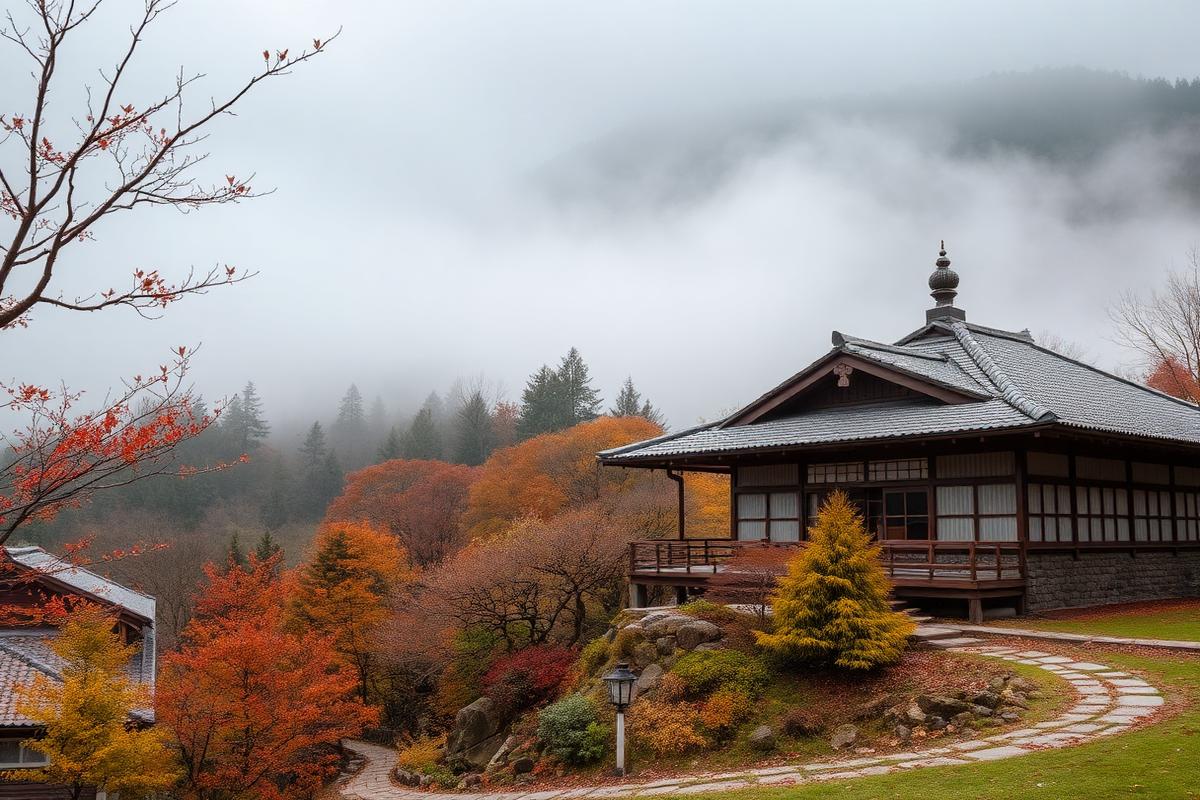
Kurokawa Onsen in Kumamoto Prefecture on Kyushu island is one of Japan's most beloved hot-spring villages — a cluster of ryokan set along a river gorge, connected by forest paths and small bridges. It has an almost fairy-tale quality, particularly in autumn when the maple trees explode in red and gold. Farther north, the Tohoku region offers ryokan in deep snow country — places where winter arrives in November and stays until March, and where the combination of heavy snowfall, outdoor hot springs, and absolute silence is something you will describe for the rest of your life.
Navigating Ryokan Booking and Etiquette
Booking a quality ryokan requires a little more effort than a standard hotel. Many of the best ones do not list on major booking platforms, or if they do, their best rooms and meal packages are reserved for direct bookings. The website Jalan and the English-language platform Rakuten Travel cover a wide range of properties. For the top-tier ryokan — the kind with multiple Michelin stars for their cuisine — booking six months ahead is not unusual, particularly for autumn and winter weekends.
- Arrive by 3 p.m. if possible — this allows time for a bath before the evening meal service.
- Inform the inn of any dietary restrictions when booking, not upon arrival; kaiseki menus are prepared hours in advance.
- Tattoos are still prohibited in many onsen facilities; check the inn's policy before booking if this applies to you.
- The yukata robe provided is for wearing everywhere in the inn and even on short walks in the village — embracing this is part of the experience.
- Tip culture does not exist in Japan; exceptional service is simply standard, and a heartfelt thank-you to your room attendant is the appropriate acknowledgment.
The Kaiseki Meal: Eating as Meditation
Kaiseki is the culinary art form that anchors the ryokan experience. It is a multi-course meal built entirely around the current season — the ingredients, the plating, the serving vessels, even the garnishes reflect exactly where you are in the Japanese culinary calendar. A kaiseki dinner in November might open with a single perfect ginkgo nut in a tiny lacquered cup of clear dashi broth, followed by a succession of small, impeccably crafted dishes featuring the mushrooms, root vegetables, and river fish of autumn.
Do not rush this meal. A kaiseki dinner at a quality ryokan takes ninety minutes to two hours, and the pacing is intentional. Each course is a pause, an invitation to focus on what is in front of you. The presentation is so considered that taking a moment to look before eating feels natural rather than pretentious. This is slow food in its most refined expression, and it recalibrates your relationship with eating in ways that last long after you leave.
Building Your Days Around the Onsen
The serious slow traveler structures their ryokan day around two long soaks: one in the morning before breakfast and one in the evening before dinner. Between those anchors, everything else is flexible and unhurried. A morning walk through the surrounding forest or village. Reading in the communal lounge. A nap on your futon in the afternoon. Watching the garden change light through your shoji screen windows.
If the surrounding area offers day-trip options — a shrine on a forested mountain, a waterfall walk, a local sake brewery — save them for the middle days of your stay. Your first and last days should be devoted almost entirely to the inn itself, letting you arrive fully and leave slowly. The middle days are when you can explore outward, carrying the stillness of the ryokan with you like a coat.
What to Bring and What to Leave Behind
Packing for a ryokan stay is a minimalist exercise. The inn provides robes, toiletries, towels, and often a small selection of teas and snacks. You need comfortable clothes for any outdoor walks, a good book, a journal if you keep one, and little else. Leave the laptop at your Tokyo hotel if at all possible. The ryokan has no business being penetrated by work.
- Bring a small daypack for village walks — you will want your hands free.
- A pair of lightweight slip-on shoes works better than lace-ups since you will be removing them constantly at traditional entrances.
- Pack earplugs if you are a light sleeper; Japanese country nights are quiet, but nearby guests in thin-walled inns can occasionally be audible.
- A small gift (omiyage) from your home country or city for the inn staff is a thoughtful gesture that will be warmly received.
The Language Question
Many ryokan in popular tourist areas have English-speaking staff, but in the deeper countryside, communication may rely on gesture, Google Translate, and goodwill — all of which work remarkably well. Japanese rural hospitality is so genuinely warm and so practiced at making foreign guests comfortable that language barriers rarely become problems. They sometimes become the best stories.
Learning even a handful of phrases in Japanese — arigatou gozaimasu (thank you very much), itadakimasu (said before eating, acknowledging the gift of the meal), and oishii (delicious) — will earn you visible delight from inn staff and fellow guests. These small linguistic efforts are disproportionately rewarded in Japan, where the attempt itself is understood as a form of respect.
Combining Ryokan Time with Gentle Exploration
A seven-night slow Japan trip might look like this: two nights in a Hakone ryokan to decompress from the flight and the city, then a scenic train journey deeper into the mountains for four nights at a more remote inn, then one final night at a ryokan on the edge of a city before flying home. This structure gives you the full arc of the experience — arrival, immersion, exploration — without any day ever feeling rushed.
The Japanese rail network makes this kind of gentle movement between ryokan deeply pleasurable rather than logistically stressful. The trains are on time, clean, and often scenic. A two-hour journey through mountain landscape between a morning soak and an evening kaiseki dinner is not transit; it is part of the experience.
What You Take Home
The thing about a week in Japanese ryokan country is that it does something specific to your sense of time. The days slow down without becoming empty. The rituals — bath, meal, walk, rest — create a rhythm that your body actually settles into. By day three, you stop checking the clock. By day five, you have had conversations with yourself that you have been postponing for months. By day seven, you genuinely do not want to leave, but you feel, paradoxically, ready to return to your life — because you have actually rested in the way that matters.