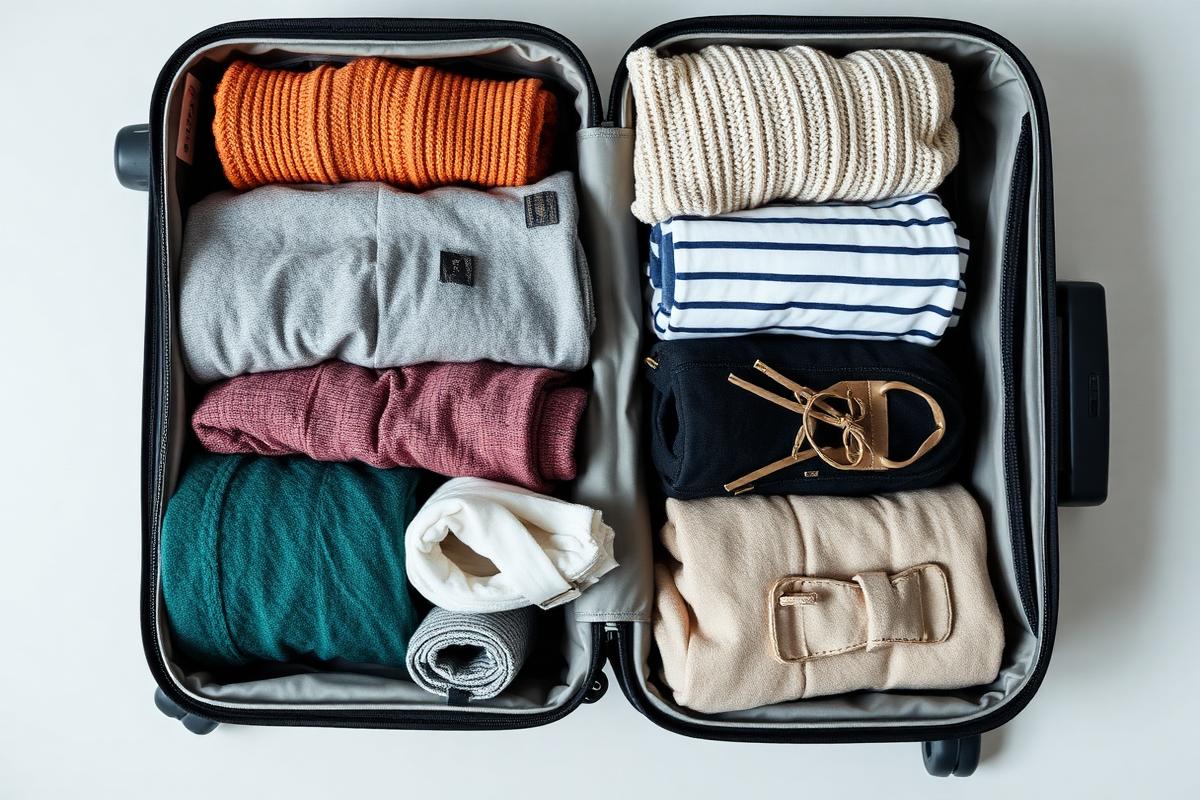

There is a moment every seasoned traveler remembers: standing at the baggage carousel, watching identical black suitcases roll past for twenty minutes while the rest of the plane has already breezed through customs. That was the day many of us decided to commit to carry-on only travel, and it turned out to be one of the best decisions we ever made on the road.
Packing a week into a single carry-on sounds like an extreme sport, but with the right strategy it is genuinely comfortable — and not just for minimalists who own three T-shirts. Whether you are heading to a beach resort, a European city break, or a multi-stop adventure, this guide will walk you through every step: choosing your bag, editing your wardrobe, organizing your liquids, and landing at your destination feeling smug instead of stressed.
Choose the Right Carry-On Bag
Before you pack a single item, you need to make sure your bag will actually fit in the overhead bin — and that it will survive the trip. Most major airlines allow a carry-on of roughly 22 x 14 x 9 inches (56 x 36 x 23 cm), but budget carriers like Ryanair and Spirit have stricter, smaller limits. Always check the specific airline policy before you buy.
Hard-shell spinners look sleek but they waste space at the rounded corners. A soft-sided bag with an external compression strap will squeeze into tight overhead bins and accept that one last jacket you stuffed in at the last minute. Look for bags made from ballistic nylon or ripstop polyester — they are light, durable, and do not scream 'expensive' to opportunistic thieves.
- Away Carry-On (hardshell, great for protection, fits most U.S. carriers)
- Osprey Fairview 40L (soft, women-specific fit, carry-on friendly on most airlines)
- NOMATIC Travel Bag 40L (soft, extremely organized layout, laptop sleeve built in)
- Tortuga Setout 45L (soft, backpack-style carry-on, serious packing space)
- Standard Luggage Co. (budget pick, under $100, meets IATA size guidelines)
If you travel frequently on a single airline, consider that carrier's exact maximum dimensions and buy to fit. A bag that is two inches too wide will be gate-checked on a full flight, defeating the entire purpose. Measure twice, pack once.
The Capsule Wardrobe Principle
The single biggest mistake people make when packing light is thinking in outfits rather than in pieces. Outfits are rigid; pieces are flexible. A capsule wardrobe is a small collection of garments that all mix and match with each other, multiplying your combination options without multiplying your clothing count.
Start by choosing a color palette of two neutrals — navy and grey, black and tan, olive and cream — plus one accent color you genuinely love. Every item you consider packing should fit that palette. A bright pink sundress that goes with nothing else in your bag is a space thief, no matter how cute it is.
- 3 bottoms: 1 versatile pant (dark jeans or chinos), 1 casual short or skirt, 1 athletic/lounge bottom
- 5 tops: 2 casual tees, 1 nicer blouse or button-down, 1 tank or base layer, 1 lightweight long-sleeve
- 1 mid layer: a packable fleece or thin cardigan
- 1 outer layer: a rain-resistant packable jacket
- 2 pairs of shoes: 1 walking shoe (sneaker or low-profile trail shoe), 1 versatile sandal or flat
- 3-4 days of underwear (merino wool dries overnight, so you can wash and re-wear)
- 2 pairs of socks beyond the pair you wear on the plane
That list sounds lean, but do the math: five tops times three bottoms is fifteen outfit combinations before you even factor in layering. Add the jacket and mid-layer and you have dressed for everything from a chilly morning walk to a casual dinner out.
Fabric Is Everything
Fabric choice is the secret weapon of expert carry-on packers. Merino wool is the gold standard: it regulates temperature, resists odor naturally, and wrinkles almost not at all. A merino tee can be worn two or three days in a row without anyone — including you — noticing. The downside is cost; quality merino pieces from Icebreaker or Smartwool are an investment, but they outlast multiple cheaper alternatives.
Synthetic travel fabrics from brands like prAna, ExOfficio, or Uniqlo's Airism line are lighter on the wallet and dry extremely fast — crucial when you are hand-washing items in a hotel sink. Cotton is the enemy of carry-on travel: it is heavy, slow to dry, and wrinkles aggressively. If you love your cotton pieces, save them for destinations where you will have easy access to a laundry service.
The Art of Packing Cubes
Packing cubes are not just organizational tools — they are compression devices that meaningfully reduce the volume your clothes occupy. The basic technique is to fold items flat, stack them inside the cube, and then zip the cube while pressing down firmly. Double-sided compression cubes (available from Eagle Creek, Peak Design, and Tortuga) have a second zipper that compresses the contents further.
A sensible system is three cubes: one large cube for bottoms and bulkier items, one medium cube for tops, and one small cube for underwear and socks. This also makes unpacking at your destination incredibly fast — pull out the three cubes, stack them in a drawer, and your bag is empty and ready to use as a day bag.
Mastering the Liquids Rule
The TSA 3-1-1 rule (containers of 3.4 oz / 100 ml or less, all fitting in one quart-sized clear zip bag) is the wall most people hit first when packing carry-on only. The solution is not to bring fewer products — it is to rethink what format those products come in.
- Solid shampoo and conditioner bars eliminate two of the largest bottles in your kit
- Solid sunscreen sticks are TSA-compliant and mess-free (Supergoop! and Sun Bum both make great ones)
- Concentrated laundry detergent sheets (Tru Earth is a favorite) replace liquid detergent
- Toothpaste tablets — try Bite or Huppy — are dry and do not count as a liquid
- Sheet masks and dry sheet face masks sidestep the liquid limit for skincare
- Refillable silicone bottles let you decant just 50–60 ml of your favorite products
With these swaps, most travelers can fit all their toiletries comfortably in a single small pouch rather than stretching the quart bag to its seams. For trips longer than ten days, plan to buy a full-size shampoo and conditioner at your destination and leave them behind when you depart.
Electronics Without the Chaos
Technology is often the heaviest, most space-consuming category in a carry-on. Be ruthless here. Ask yourself: will I actually use this on this specific trip? A laptop is non-negotiable for many travelers, but a tablet plus laptop is rarely both necessary. An e-reader replaces a stack of books. Wireless earbuds replace a tangle of wired headphones.
A flat tech organizer pouch (Peak Design's Field Pouch or Cocoon's Grid-It) keeps all your cables, adapters, and small accessories together and accessible without spilling across the rest of your bag. Carry one universal travel adapter rather than multiple country-specific plugs. A 10,000 mAh power bank is enough to charge a phone three times — you do not need the 26,800 mAh brick unless you are going fully off-grid.
Wearing Your Bulkiest Items
Your body is technically unlimited carry-on space. Wear your heaviest shoes, your jeans, and your bulkiest jacket onto the plane. Yes, you might feel slightly overdressed in the departure lounge, but you will free up a significant amount of bag space for lighter items. This trick alone can make the difference between a stuffed bag and a comfortable one.
If you are wearing a structured jacket that you do not want to crush, bring it on as your personal item and hang it in the coat closet (if the plane has one) or lay it flat in the overhead bin. Most flight attendants are happy to help with this.
Personal Item Strategy
Almost every airline allows both a carry-on and a smaller personal item (typically under 18 x 14 x 8 inches). Use this wisely. A structured tote or a slim backpack as your personal item becomes your in-flight bag and your daily day bag at your destination — this means your main carry-on can go in the overhead and stay there for the entire flight, untouched.
Pack your personal item with the things you will actually need during the flight: laptop or tablet, headphones, snacks, a light layer, your passport and travel documents, and any medication. When you land, you can slip your laptop into the overhead bag and use the tote or backpack as a lighter city bag.
The Final Packing Check
Once you think you are done packing, lay everything out on your bed and do one final audit. Pick up each item and ask: have I used this on the last three trips? If the answer is no, leave it. If you are genuinely unsure about an item, leave it. You can buy almost anything you forget at your destination, and it is always more fun to shop local than to lug something across an ocean that you never touch.
Weigh your bag before you leave the house. Most carry-on bags, fully packed, should come in under 22 lbs (10 kg) — and ideally closer to 15 lbs (7 kg) for comfortable overhead lifting. If you are over that, something has to come out.
Laundry on the Road
The secret that makes carry-on-only travel truly sustainable for longer trips is doing laundry. You do not need a laundromat every day — merino and synthetic fabrics need only a quick rinse in the sink, a gentle squeeze (never wring), and an overnight hang to dry. For heavier items like jeans or a fleece, budget one laundromat visit per week or ask your hotel if they offer a wash-and-fold service. Many mid-range hotels charge less than $10 for a bag of laundry.
Mastering carry-on-only travel is a skill that compounds over time. The first trip might feel like a puzzle, but by your third or fourth carry-on-only adventure you will wonder how you ever tolerated the baggage carousel. You will move faster, spend less, and feel lighter — in every sense of the word.