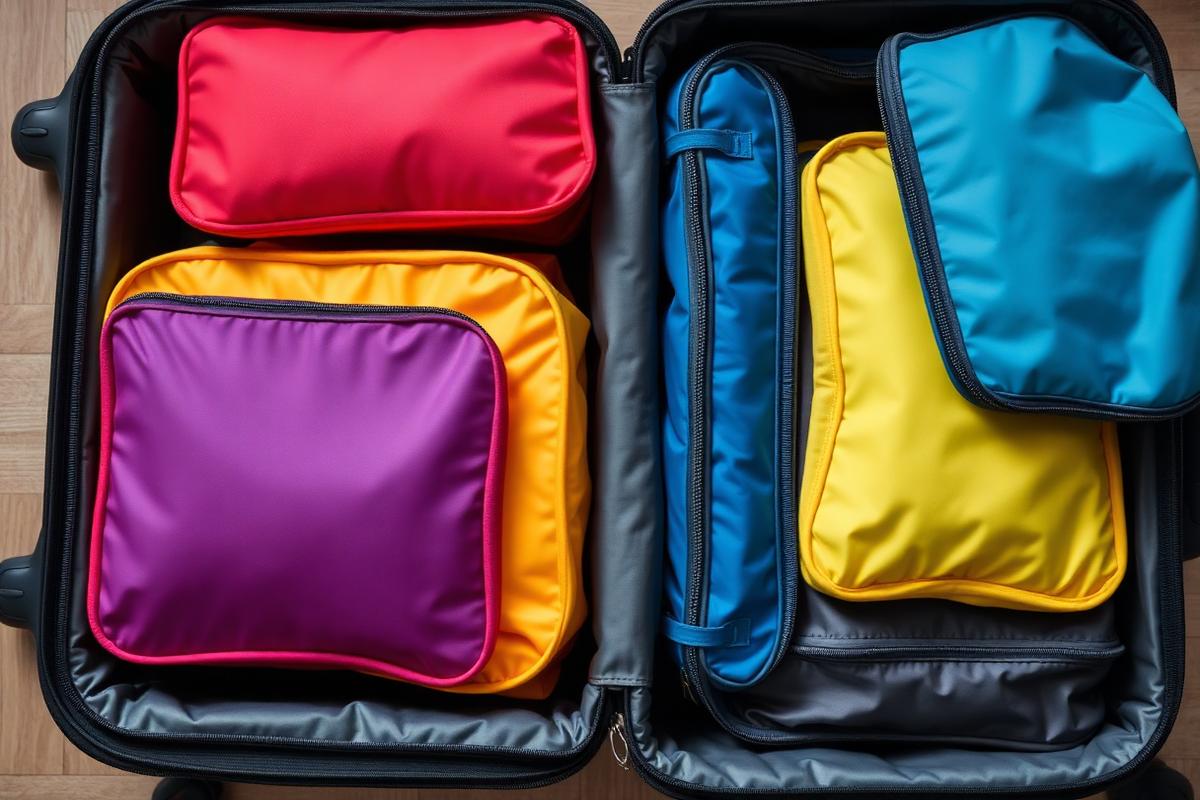

If you have ever watched a fellow traveler unpack their bag and marveled at how orderly and compact everything was, packing cubes were almost certainly the reason. These lightweight fabric organizers have quietly revolutionized travel over the past decade — not because they are magic, but because they impose a system, and systems work. When every item has a place, you stop re-packing your entire suitcase just to find your phone charger.
But packing cubes are not all created equal, and using them without a strategy produces only modest gains. This guide covers everything: the best cubes on the market, the folding methods that maximize compression, a room-by-room organizational system, and the specific tricks that make your bag feel effortless to live out of — whether you are traveling for four days or four months.
What Packing Cubes Actually Do
At their most basic, packing cubes are rectangular pouches with mesh tops and zippered closures. They act as subcategories within your bag: instead of a chaotic pile of clothes, you have labeled, bounded sections. The mesh top lets you see what is inside at a glance; the structured edges stop your folded clothes from unfolding when you dig around in the bag.
Compression cubes add a second zipper panel that squeezes the contents down. The compression does not fold your clothes more neatly — it pushes out trapped air between fabric layers, reducing the overall volume. Depending on fabric type, you can expect 20–50% space savings from a good compression cube compared to loose packing.
Choosing the Right Cubes
The packing cube market has exploded in the last five years, and quality varies dramatically. Cheap cubes from discount retailers have thin zippers that fail under the stress of actually compressed clothing. Pay for quality here — your cubes will outlast dozens of trips if you buy well.
- Eagle Creek Pack-It Specter: the lightest option available, nearly weightless mesh material, great for warm-weather trips
- Tortuga Packing Cubes: double-sided compression, very durable, designed specifically for travel backpacks
- Peak Design Packing Cube: beautifully designed, origami-folding lid, premium but worth it for frequent travelers
- Away Packing Cubes: matching set designed for Away luggage dimensions, great quality-to-price ratio
- Amazon Basics Packing Cubes: genuinely decent for the price, fine for occasional travelers not ready to commit
Buy a set of three sizes: one large (fits bulky items and bottoms), one medium (tops and layers), one small (underwear, socks, accessories). Some travelers add a fourth flat cube for electronics and cables. Do not buy a set of six same-sized cubes — size variation is what makes the system work.
The Ranger Roll Folding Method
The folding method you use inside your packing cubes matters as much as the cubes themselves. The ranger roll — a military-derived tight rolling technique — produces the most compact, wrinkle-resistant results for most clothing types. Here is how to do it: lay your item flat, fold the bottom hem up about three inches (this creates a cuff that locks the roll). Fold one side toward the center, then the other side. Now roll tightly from top to bottom, keeping everything as neat as possible. When the roll is complete, fold the bottom cuff over the outside of the roll to lock it in place.
Ranger-rolled clothing stands upright in a packing cube like files in a drawer, rather than stacking flat. This means you can see every item in the cube without disturbing anything else — a huge quality-of-life upgrade when you are living out of your bag.
Flat Folding for Dress Clothes
Rolling works beautifully for casual clothing, but structured items — blazers, dress shirts, blouses with specific shapes — do better with careful flat folding. Button shirts should be buttoned fully, laid face-down, folded in thirds lengthwise, then folded from hem to collar. Stacking folded dress items with tissue paper between them (or even a plastic dry-cleaning bag) prevents transfer wrinkles. If you are traveling to a formal occasion, a hanging garment bag that fits inside your carry-on may be worth the slight bulk.
A System That Works: Category-Based Organization
The most effective packing cube system organizes by category, not by outfit. Category-based packing means that when you want a pair of socks, you know exactly which cube they are in — you never unpack your entire bag looking for one item.
- Large cube: bottoms (pants, shorts, skirts) — these are your heaviest items and go at the bottom of your bag
- Medium cube: tops and layers (T-shirts, blouses, lightweight sweater) — goes on top of the large cube
- Small cube: underwear and socks — fills in gaps around the larger cubes
- Flat pouch or small cube: electronics, cables, adapters — keep this in the top layer for security checkpoint access
- Separate toiletry bag: liquids and personal care — should be a standalone bag that can be removed easily at airport security
When you place cubes in your bag, think of it like Tetris: large cube flat at the bottom, medium cube on top, small cube tucked alongside, toiletry bag accessible at the top. Your shoes (if packed) go soles-facing-out along one side of the bag, with socks stuffed inside them to save space.
Packing for Different Trip Lengths
For a weekend trip (2-3 days), one medium cube and one small cube is genuinely all you need. For a week-long trip, the classic three-cube set handles everything. For two weeks or more, the trick is not adding more cubes — it is planning around doing laundry. Add one extra set of underwear and socks per additional week, use your same three cubes, and find a laundromat or use a hotel laundry service every five to seven days.
Many experienced long-term travelers use a fourth cube as a 'dirty laundry' cube — separate from the clean clothing cubes. When items are washed and dry, they go back into their clean cubes. This system means your bag never has clean and dirty mixed together, and you always know at a glance how close you are to laundry day.
Packing Cubes for Other Bag Compartments
Packing cubes work beyond just clothes. A small flat cube is perfect for organizing your personal item or daypack: it can hold a notebook, pens, sunscreen, a mini first aid kit, and other small items without everything floating loose. Another small cube is ideal for your beach bag essentials: goggles, sunscreen, a waterproof phone pouch, a hair tie.
For families, assign each person a different color-coded cube set. When you are unpacking at a vacation rental, it takes seconds to sort everyone's clothes into the right drawer. When you re-pack to leave, each person's cubes clip together naturally and nothing gets left behind.
Maximizing Compression Without Wrinkling
The most common complaint about compression cubes is that they wrinkle clothing. This is true — compression forces fabric layers together and creases form under pressure. The mitigation strategies are: use wrinkle-resistant fabrics (synthetic blends, merino wool), avoid over-compressing items that you need to look crisp in, and hang or steam clothing immediately after unpacking. Most hotel rooms have a steam function in the bathroom — hanging clothes near a hot shower for a few minutes removes light compression wrinkles effectively.
Maintaining Your System at the Destination
The system falls apart if you stop using it at your destination. When you arrive, pull the cubes out of your bag and either stack them in a drawer or leave them on a shelf. Do not unpack clothes directly into dresser drawers unless you are staying for more than a week — the cubes act as your drawers and re-packing becomes effortless.
When an item is dirty, put it back in its cube or in a designated dirty laundry cube rather than dropping it loose in your bag. This single habit is what separates travelers who are always scrambling to re-pack from those who can be checked out and bag-in-hand in under five minutes. The cube system only works as well as your commitment to using it consistently.
The Best Packing Cube Hacks
- Label your cubes with luggage tags or marker so housekeeping at hotels does not accidentally move them
- Stuff dryer sheets inside cubes to keep clothes smelling fresh during long trips
- Use a clear mesh cube exclusively for items you need airport-security access to (liquids, electronics)
- Pack your next-morning outfit on top of the relevant cube so you can access it without unpacking everything in a dark hotel room
- Use the small cube as a beach bag by itself — waterproof-lined small cubes exist for exactly this purpose
Once you build packing-cube habits into your travel routine, you will struggle to remember how you ever managed without them. They are not flashy gear — there is no technology inside, no clever engineering — but the system they impose on your packing is worth every cent. Give yourself one or two trips to develop the habit, and you will be a lifelong convert.