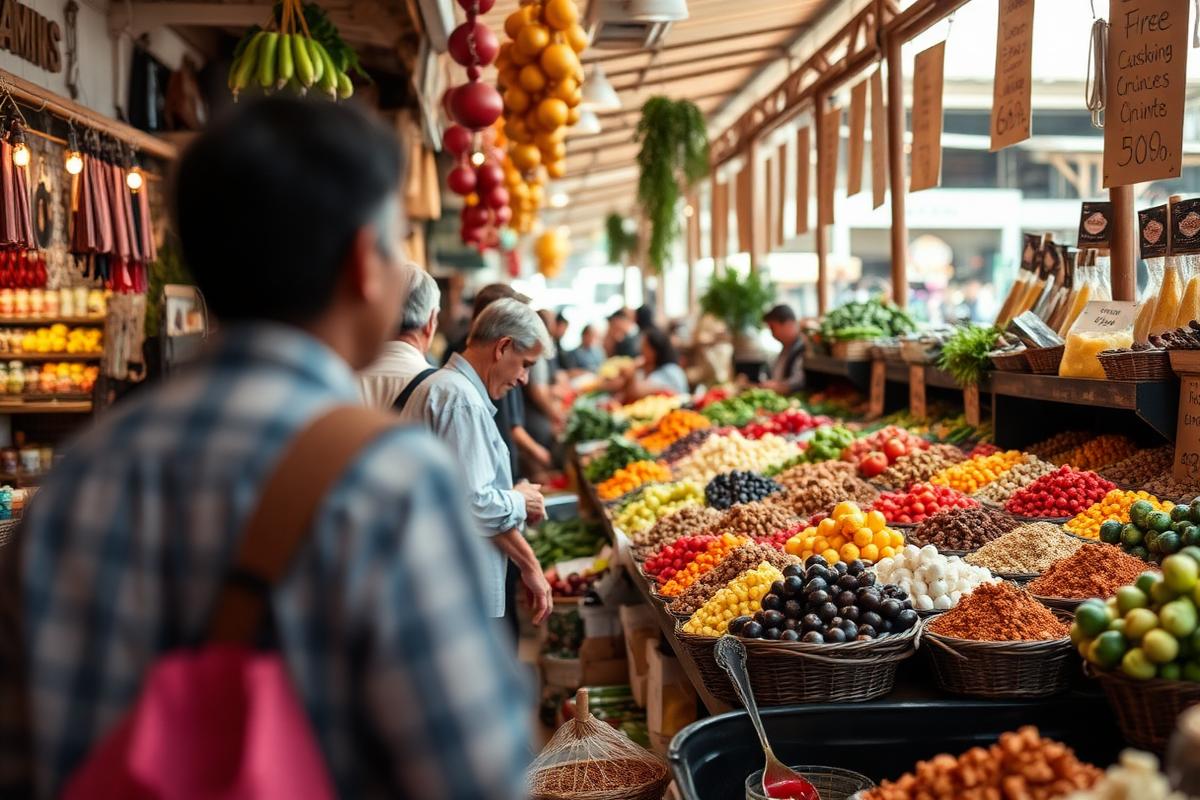

If you want to understand a place in its bones — not the version it presents to tourists, but the actual daily texture of how people live — find the market. Not the tourist market full of mass-produced handicrafts and T-shirts printed with the city's name. The real market: the one where people shop for their week's food, argue about prices, catch up on neighbourhood gossip, and conduct the ordinary commerce of everyday life. That market is one of the most revealing spaces in any culture, and almost every city has one.
Markets have been the centre of human commercial and social life for most of recorded history. They predate supermarkets by millennia and remain the primary food shopping venue for a large portion of the world's population. In the way a market is organised, what it sells, how prices are set, how vendors and customers interact, and what role it plays in community life, you can read the economic system, the agricultural traditions, the social hierarchy, and the culinary values of an entire culture. This is why I make visiting the market a non-negotiable first-day activity in every new city.
What a Market Reveals That No Museum Can
Museums show you history preserved and curated. Markets show you history alive. The varieties of tomatoes at a Provençal market — a dozen different shapes and colours, each with a name and a story, each suited to a specific preparation — tell you as much about French agricultural heritage as any exhibition on rural life. The dried herb stalls in a Moroccan souk, each spice displayed in colourful mounds and sold by weight to women who know exactly what they need for each dish, tell you more about the spice trade and its ongoing role in daily life than any history book.
Markets are living documents of a place. They reflect what is seasonal, what is affordable, what is celebrated, and what is everyday. They show you who does the shopping (in many cultures, this is still primarily women, which reflects gender dynamics across the society). They show you the economic geography of a city — which produce comes from where, which imported goods have arrived and at what price. Markets make the abstract concrete, the distant close, the historical present.
How to Actually Engage With a Market
The difference between a tourist who walks through a market taking photographs and a traveller who genuinely engages with it is mostly one of approach. Genuine engagement means slowing down, asking questions (even across a language barrier), tasting before buying, and allowing yourself to be surprised rather than confirming what you already expected to find.
- Arrive with a genuine shopping intention: buy your lunch ingredients, or a gift to take home, or simply the best piece of fruit you can find. Having a purpose transforms observation into participation.
- Learn the names of five things before you arrive — specific produce, a local specialty, a traditional ingredient — so you have something to look for and a conversation starter.
- Watch transactions before you participate in them. Note the negotiation style, the social rituals around buying and selling, how money changes hands. This contextual knowledge makes your own engagement feel natural rather than awkward.
- Ask vendors what they would recommend or what they are proudest of. This simple question — asked with a smile across any language gap — almost always produces a delicious answer.
- Stay longer than feels comfortable. Most market tourism is rushed. The interesting things happen after you have been standing in one spot long enough to stop being the spectacle.
Markets as Social Space: Beyond the Transaction
In many cultures, the market is as much a social venue as a commercial one. In West Africa, the weekly market is a major community event drawing people from surrounding villages who meet to trade, share news, see family, and collectively hold the social fabric together. In Latin American town squares, the weekend market functions as the living room of the community — people bring their children, their elderly relatives, their friends, and spend hours rather than minutes.
Even in cities where the primary supermarket has taken over most food shopping, the traditional market preserves a different social register: slower, more personal, more relational. Vendors know their regular customers by name. Elderly shoppers who might be isolated at home find community in the weekly routine of the market visit. The transaction is embedded in relationship in a way that the supermarket checkout simply cannot replicate.
Great Markets of the World Worth Planning a Trip Around
Some markets are extraordinary enough to justify planning a trip around them — not because they are tourist attractions (though many have become that too) but because they represent a high point of a regional food culture or market tradition.
- La Boqueria, Barcelona (Spain): Despite its fame and tourist crowds, the back sections of La Boqueria remain a genuine working market where local chefs and neighbourhood families shop. Go on a weekday morning and head past the tourist-facing fruit stalls to the meat, seafood, and specialist produce sections.
- Tsukiji Outer Market, Tokyo (Japan): The famous tuna auction moved to Toyosu, but the outer market remains a extraordinary concentration of specialist food vendors, knife shops, and early-morning restaurants catering to chefs and market workers.
- Mercado de San Juan, Mexico City (Mexico): An upscale food market beloved by local chefs, with extraordinary variety of Mexican regional ingredients — rare chiles, Mexican cheeses, heirloom corn, exotic meats — alongside excellent food stalls.
- Monastiraki Flea Market, Athens (Greece): Combines an incredible food market with an extraordinary antique and bric-a-brac section. Sunday mornings are the most vibrant time, when the market spills through entire neighbourhood streets.
- Dezerter Market (Green Market), Tbilisi (Georgia): A genuine neighbourhood food market selling seasonal Georgian produce, dried herbs, churchkhela, local honey, and pickled vegetables. Almost entirely untouched by tourist programming.
- Kimironko Market, Kigali (Rwanda): One of the great African markets, enormous and organised by section, offering extraordinary insight into Rwandan daily food culture and the rapid economic development of the country.
The Language of Display: What the Stall Setup Tells You
The way market vendors arrange and display their goods is a cultural text worth reading carefully. A vendor who stacks their tomatoes in perfect coloured pyramids and tends them obsessively has a different relationship with their product than one who shovels everything into a single pile. The vendors who have personal photographs attached to their stall, or who display the name of the farm where their produce came from, are making a statement about provenance and identity.
In Japanese markets, the presentation standard is extraordinary — each item individually arranged, labelled with origin and price, often wrapped with a precision that treats even a single persimmon as a precious object. In Turkish bazaars, the theatrical stacking and shouted price declarations are equally intentional — a different aesthetic that values abundance and performance. In both cases, the display style is a window into the cultural values around food, commerce, and beauty.
Eating at the Market: The Best Meal of Any Trip
Market food — the dishes prepared and sold by vendors within or immediately adjacent to a market — is almost universally among the best food available in any city. The logic is simple: the ingredients come from immediately adjacent stalls at the peak of freshness, the vendors cook in enormous volume for extremely discerning regular customers who return daily, and the price has to stay competitive with cooking at home. All of these forces combine to produce food of remarkable quality and value.
The best market eating is often not at designated food stalls but at the margins: the woman selling corn cakes from a basket at the market entrance, the man with a single-dish cart positioned to catch the stream of market workers at their mid-morning break, the covered seating area where vendors and their families eat lunch together. These micro-venues are found by wandering slowly and following your nose, and they produce the kind of meal that makes you stop mid-bite and simply marvel.
Bringing Market Wisdom Home
One of the greatest gifts of market travel is the shift in how you think about food at home. After shopping at a Provençal market in the height of summer and eating tomatoes that actually taste like tomatoes, the supermarket tomatoes that were harvested green and gassed to ripen artificially taste different to you — or rather, their absence of taste becomes newly apparent. The market teaches you standards that raise your whole relationship with food.
Seek out a farmers market, a food cooperative, a small producer, or a specialty grocer in your home city with the same intentionality you bring to market visits when travelling. The principles are the same: buy seasonal, buy from producers who know their products, ask questions, take time, and treat food shopping as a pleasure rather than a chore. The market mindset is entirely portable — and it makes every meal, wherever you are, more alive.