
Accommodation is usually the second-largest travel expense after flights, and it is also the most flexible. Unlike flights, where prices are largely set by yield management algorithms, accommodation prices respond quickly to timing, negotiation, and the platform you book through. A little strategy here can free up hundreds of dollars per trip — money you can spend on experiences that actually make memories.
Budget accommodation does not mean miserable nights on paper-thin mattresses in rooms that smell like yesterday's regrets. The accommodation landscape has changed enormously. Boutique hostels with private rooms now compete with mid-range hotels on price and frequently beat them on social atmosphere and local character. Apartment rentals offer genuine comfort at a fraction of hotel prices for longer stays. And loyalty program hacks can deliver luxury hotel stays at budget prices if you know how to play the game. This guide covers all of it.
Rethink the Hotel as Your Default
Hotels are convenient and consistent, but they are rarely the best-value accommodation option — especially in popular tourist cities where supply is tight. Before defaulting to Booking.com or Hotels.com, take ten minutes to explore the full range of options: guesthouses, boutique hostels, apartment rentals, homestays, and serviced apartments. Each has contexts where it excels and contexts where it falls short.
A rule of thumb: for stays under three nights in a major city, hotels or hostels often make sense for the convenience of no check-in hassle. For stays of four nights or more, an apartment rental typically offers better space, a kitchen that saves money on meals, and a more local feel that hotels simply cannot replicate.
The Modern Hostel: Not What You Remember
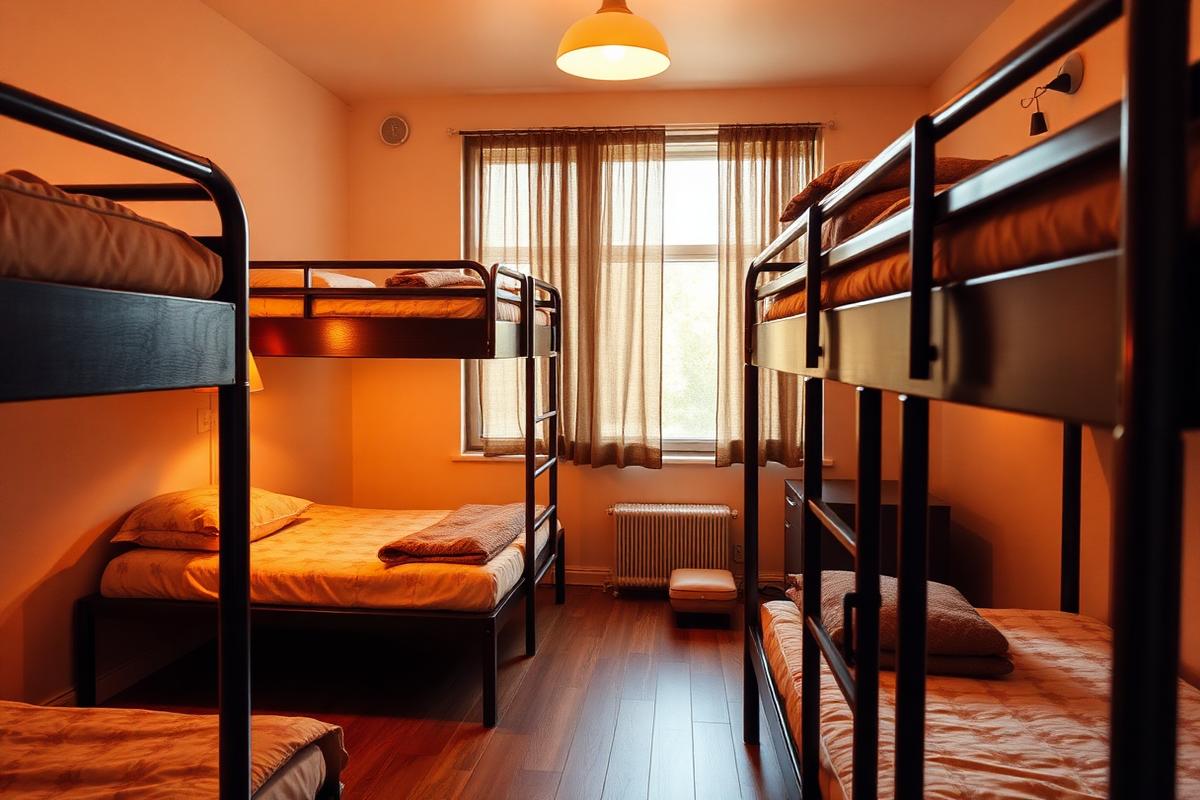
If your mental image of a hostel involves bunk beds in a humid room with twelve strangers, you have not seen what the hostel industry has become. Generator Hostels in Europe, Freehand Hotels in the U.S., and Selina across Latin America and beyond are hostel brands offering private en-suite rooms with thoughtful design, excellent social spaces, co-working areas, and quality breakfast options — at prices 30–60% below equivalent-quality hotels in the same city.
Even traditional dorm-style hostels have improved dramatically. Most top-rated hostels now offer pod-style bunks with privacy curtains, individual reading lights, and personal power outlets. Apps like Hostelworld allow you to filter by 'private room only' and read detailed reviews that paint an honest picture of noise levels, cleanliness, and location.
- Generator Hostels (Europe): boutique design, private rooms available, great social bar
- Selina (global): co-working, surfing, yoga — very popular with digital nomads and slow travelers
- Freehand Hotels (U.S.): part hostel, part boutique hotel — private rooms in great city locations
- Casa Gracia (Barcelona): beautiful building, excellent rooftop, mixed dorm and private
- The Drifter (New Orleans): pool, live music, vintage aesthetic — better than most local hotels
Apartment Rentals: The Long-Stay Secret
For trips of four nights or longer, apartment rentals on Airbnb, Vrbo, or Booking.com are almost always better value than hotels of equivalent comfort. You get a kitchen (saving money on meals), more square footage, the ability to do laundry, and a neighborhood feel that hotels cannot offer. A one-bedroom apartment in Lisbon or Medellín that costs $70 per night would cost $150+ for an equivalent hotel room in the same area.
Tips for getting the best apartment rental experiences: read recent reviews carefully and look specifically for mentions of cleanliness, responsiveness of the host, and noise levels. Check that the apartment has air conditioning (or heating, depending on season) explicitly listed. Look at the check-in instructions — keypad entry or lockbox is far more convenient than waiting for a specific-time host handover. And always message the host before booking to gauge responsiveness.
Hotel Loyalty Programs: Play the Long Game
If you stay in hotels regularly — even only a few times a year — committing to a single hotel loyalty program pays off. Marriott Bonvoy, Hilton Honors, and IHG One Rewards are the three largest programs. Status in these programs (typically earned by staying a certain number of nights per year) delivers free breakfast, room upgrades, late checkout, and bonus points on paid stays.
You do not need to travel frequently to build points: co-branded hotel credit cards (like the Chase Marriott Bonvoy card or the Hilton Honors American Express card) award large welcome bonuses of 100,000+ points just for meeting a minimum spend requirement. These points can be redeemed for free nights at properties that would otherwise cost $200-400 per night.
Timing Your Booking for Maximum Savings
Unlike flights, where booking earlier generally produces better prices, hotel prices often drop closer to the date — especially in cities where occupancy is uncertain. Hotels would rather sell a room at a discount than let it sit empty. For flexible travelers, booking one to two weeks before arrival in non-peak season can yield savings of 20–40% compared to booking months ahead.
The exception is peak season, popular festivals, and major events. During Edinburgh Fringe, Barcelona's La Merce, or New Orleans Jazz Fest, accommodation books out months ahead at premium prices. For these trips, early booking is essential.
The Art of the Room Upgrade
A free room upgrade is one of the most satisfying wins in budget travel. The most reliable way to get one is to simply ask — politely, in person, at check-in. The second most reliable way is to arrive late in the afternoon when the hotel has a clear picture of that night's occupancy and any unsold premium rooms. Loyalty status is the surest guarantee of upgrades, but even without status a friendly, genuine request at the front desk succeeds surprisingly often.
Booking direct (rather than through a third-party site) also makes you eligible for upgrades at many hotels — OTA bookings are often excluded from upgrade consideration because the hotel earns less margin on those reservations.
Booking Platforms Comparison
- Booking.com: largest inventory, best for last-minute deals, 'Genius' loyalty tier gives discounts
- Hotels.com: 'Collect 10 nights, get 1 free' loyalty program — excellent for frequent hotel stays
- Airbnb: best for apartments and unique stays, great for longer trips
- Hostelworld: the go-to for hostel bookings, excellent filter system and review quality
- HotelTonight: specialized in last-minute deals (booking within a few days of arrival), often excellent prices on quality hotels
- Direct hotel website: always check — often offers price-match, free cancellation, and upgrade eligibility
Alternative Accommodation: Homestays and House-Sitting
For the most adventurous budget travelers, homestays and house-sitting offer accommodation at little to no cost in exchange for cultural exchange or light caretaking duties. Workaway and WWOOF connect travelers with hosts who offer room and board in exchange for a few hours of work per day — gardening, childcare, language exchange, farm work. House-sitting platforms like TrustedHousesitters and HouseCarers connect pet-owners going on vacation with travelers willing to care for their home and animals in exchange for free accommodation.
These options require more planning and a certain flexibility of schedule, but they can cut accommodation costs to near zero for extended trips. The TrustedHousesitters membership ($129/year for a standard membership) pays for itself after a single successful sit in most cities.
Saving on Accommodation Taxes and Fees
Hotel and Airbnb service fees can add 15–25% to the price you see in initial search results. Always check the final price at checkout before committing to a booking. For Airbnb specifically, the 'total before taxes' breakdown often reveals service fees of $20–60 per night that make a seemingly cheap listing equivalent in price to a hotel. Use the 'display total price' filter in Airbnb's search settings to see all-in prices from the start.
The best accommodation budget is the one that is conscious rather than habitual. Challenge every assumption — that you need a private hotel room, that a hostel is uncomfortable, that apartment rentals are complicated. The travelers who sleep well on modest budgets are not the ones roughing it; they are the ones who researched smarter.